
How to Adjust Furniture for Tall People
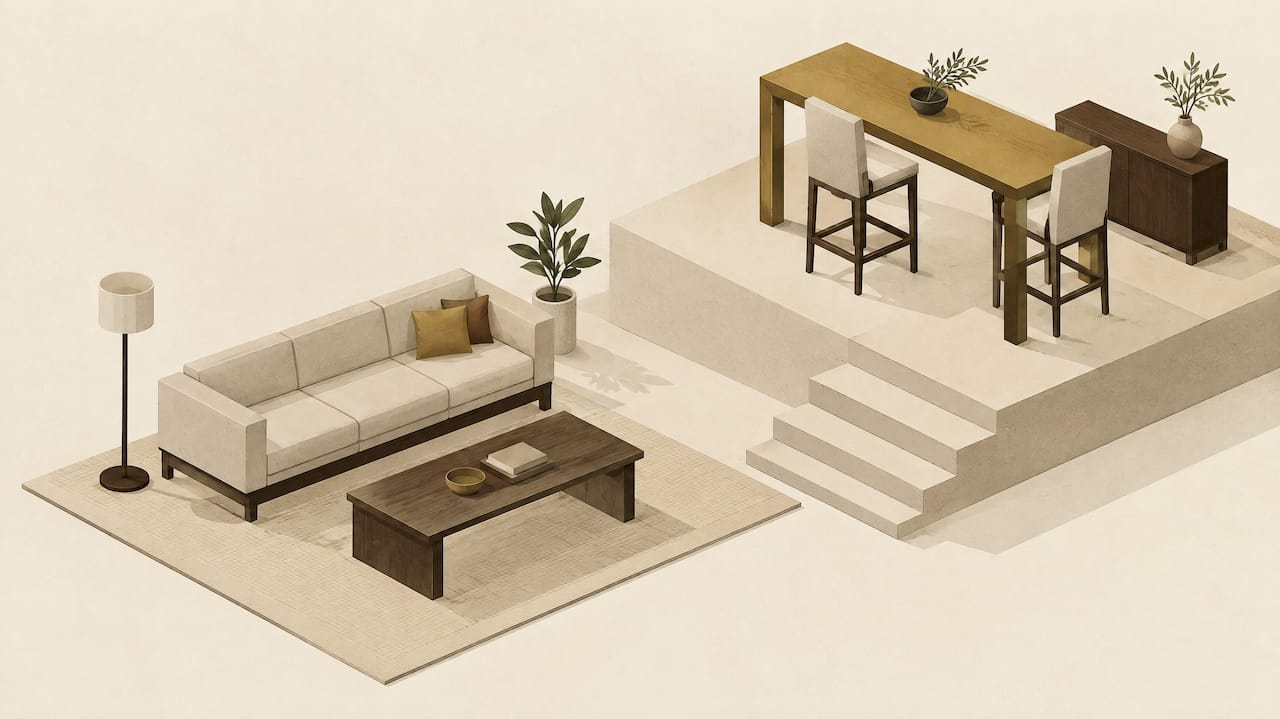
The most reliable way to adjust furniture for a tall body is to raise it with risers cut to your exact measurements. Measure your knee height, compare it with the compressed height of the seat or mattress, and lift the piece by the difference. Our custom furniture risers are made to the hundredth of an inch, so the lift you calculate is the lift you get, whatever shape the legs are.
TL;DR
- Seats and beds that sit lower than your knees make you fold into them and strain to stand up. Raising the legs fixes this without replacing the furniture.
- Measure the back of your knee to the floor, then the height of the seat or mattress while you sit on it. The difference is the lift you need.
- Aim for a seat or bed at or slightly above knee height, and a desk surface at or slightly below elbow height.
- Check the weight rating, centre legs, floor protection and wobble before you sit on a raised piece.
- Risers made to your measurements fit round, angled and irregular legs that preset sizes often miss.
Table of Contents
- Why standard furniture is too low for tall people
- How to measure the lift you need
- Target heights for each piece
- Ways to raise furniture, and why made-to-measure comes first
- Piece by piece
- Small apartments: lift and gain storage
- Make the raised piece stable and safe
- Match the look
- Order risers cut to your numbers
- Our view
- FAQ
- Sources
Why standard furniture is too low for tall people
Most furniture is designed around a middle range of bodies. The University of Washington’s office ergonomics guidance says its chair guidelines cover the 5th percentile female to the 95th percentile male, and that tall, petite or large-framed people may need equipment outside those standard ranges to keep a neutral, unstressed posture. If you are tall, you sit at the edge of that range, or past it.
The result is familiar. Your knees sit higher than your hips on a low sofa. Standing up from a deep, low seat takes a push. A bed edge hits mid-shin, so you perch on it awkwardly. A desk forces your shoulders up or your back forward.
The fix is rarely a new piece. A solid sofa, a bed frame you love or a dining set that matches your room can stay. You change the one number that is wrong: the height off the floor.
How to measure the lift you need
Guessing leads to risers that are too short to notice or too tall to be stable. A simple two-measurement method is used in occupational therapy guidance, and it works for any tall person.
- Measure your knee height. Sit up straight with feet flat, ankles, knees and hips at roughly 90 degrees, in the shoes you usually wear indoors. Measure from the floor to the back of the knee. Brunel University’s measurement guidance describes this posture.
- Measure the compressed seat or mattress height. Sit on the sofa, chair or bed so your weight squashes the cushion, then measure from the floor to the underside of your thighs. Health New Zealand stresses that this squashed height is the one that counts. If you are alone, the NHS guidance on measuring furniture says to compress the surface yourself, though a helper makes it easier.
- Subtract. Knee height minus compressed height is the lift. If the compressed height already equals or exceeds your knee height, the piece is already at a good height or too high.
Worked example. Your knee height is 22 inches. You sit on your sofa and the compressed seat measures 16.5 inches. The difference is 5.5 inches, so you need a 5.5 inch lift. Because our risers are built to the dimensions you enter, you can order 5.5 inches exactly, not the nearest preset size.
When you are picking new seating rather than lifting what you own, the same knee measurement guides the choice. If a built-in or made-to-measure piece is part of your plan, custom-made living room furniture lets you set the seat height from the start.
Target heights for each piece
The heights below come from published ergonomic guidance. Use them to sanity-check the number you calculated.
| Piece | Target for tall users | Source |
|---|---|---|
| Dining chair seat | Floor-to-knee of about 17 to 18 in suits seats of about 18 to 19 in (45 to 48 cm) | Maxi Home |
| Sofa seat | 46 to 50 cm (about 18 to 20 in) for people 180 cm (about 5 ft 11 in) and taller | Maxi Home |
| Sofa seat depth | 62 to 70 cm for people 185 cm (about 6 ft 1 in) or taller | Maxi Home |
| Bed | At or slightly above knee height, so knees stay near 90 degrees when you sit on the edge | Maxi Home lists 60 to 70 cm total height |
| Office chair seat | Adjustable across at least 15 to 22 in, with 17 to 19 in seat depth for taller users | University of Washington |
| Desk surface | In line with or slightly below elbow height, feet flat on the floor | FIRA |
Treat these as ranges, not rules. Your own knee and elbow measurements outrank any table, because bodies with the same height have different leg lengths.
Ways to raise furniture, and why made-to-measure comes first
Risers come in a few families. Fixed-height blocks, stackable sections and adjustable raisers all exist, and so do screw-in feet and cup-style risers that hold the foot in a recess. The trouble is that preset sizes rarely match both the lift you need and the leg you have.
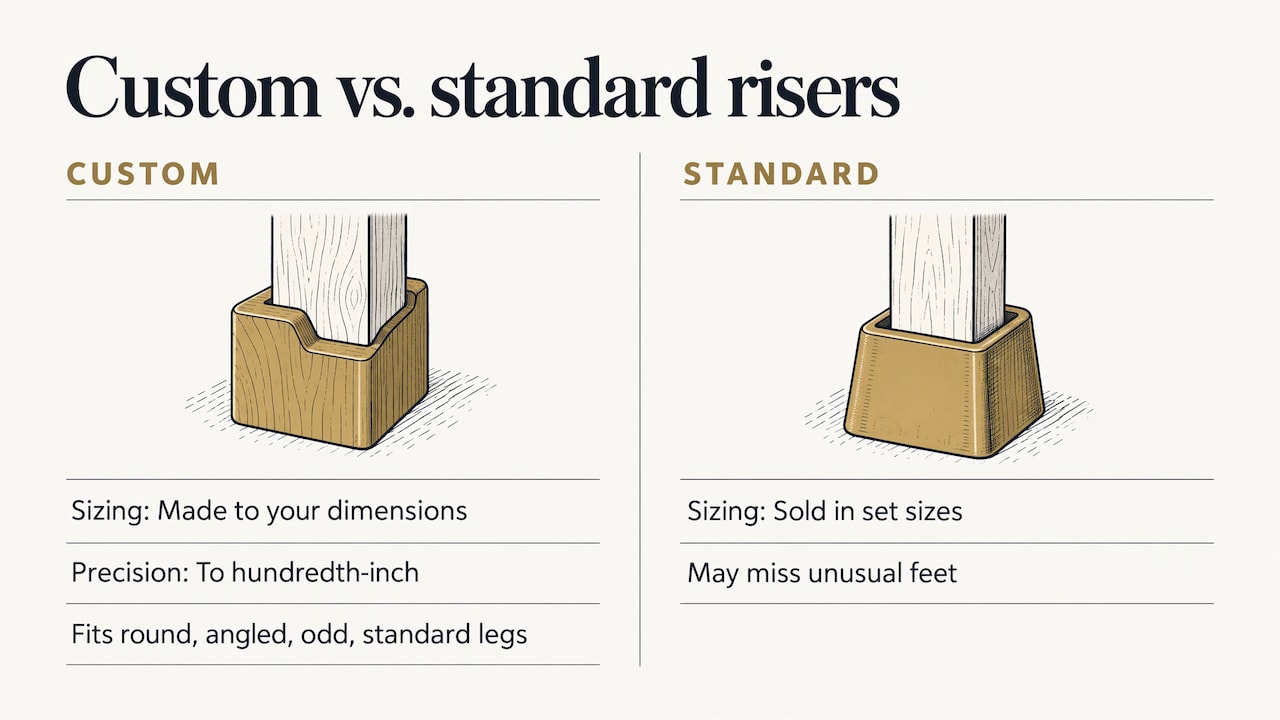
That is the gap custom risers close. We make ours to the dimensions you specify, down to the hundredth of an inch, and they support round, angled, irregular and standard legs. Standard risers are sold in set sizes and may not fit an unusual foot at all. If your sofa has tapered or splayed legs, or your bed frame has thick posts, a riser shaped to that leg sits flat and holds it securely.
A riser also beats a cushion. Occupational therapy guidance says raising the legs is better than adding cushions, because cushions lower the effective armrest height and reduce the push-up help you get from the arms. Raising the legs lifts the whole piece, arms included.
Piece by piece
Sofas and couches
Tall people feel a low sofa most when standing up. Lift the sofa until the compressed seat reaches your knee height, then check that your feet still rest flat. Our couch and sofa risers are made for this, and our guide to sofa seat height explains what is standard and how to land on your number. If the sofa is heavy or has a sleeper mechanism, look at heavy duty furniture risers.
Beds
A bed at or slightly higher than your knees lets you sit on the edge with feet on the floor and stand without a heave. Beds usually need more than four corner supports: king frames and some queens have centre legs that must be lifted too, otherwise the middle of the frame ends up carrying the load at the old height. Our bed risers are made to your leg size, and you can order one for each leg, centre ones included.
Dining and desk chairs
For dining chairs, match the seat to the table. A seat that is too high pushes your thighs against the underside of the table; too low and you reach up to eat. Our dining chair risers guide walks through the table-to-seat gap, and the chair risers page lets you configure the lift. For office chairs, an adjustable gas lift is the usual route, and the University of Washington notes that longer pneumatic cylinders may be needed outside standard guidelines. Our article on chair risers for tall people covers fixed chairs that cannot adjust.
Desks and tables
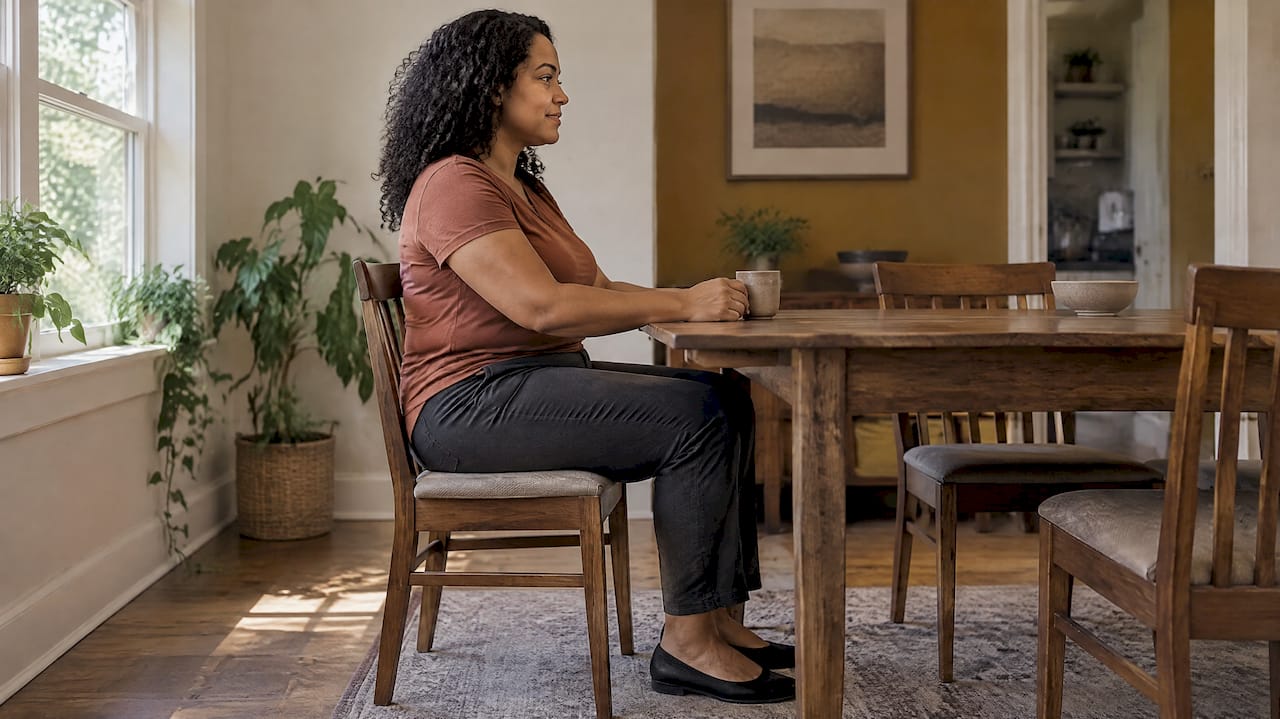
FIRA’s guidance says that if your knees end up higher than your hips at a fixed desk, the desk is too low. Raise it so the worksurface sits at or slightly under elbow height with your shoulders relaxed. Desk risers and table risers lift the legs by the exact amount, and our home office ergonomics guide shows how to set the chair and desk together. If you have drawers or a keyboard tray, remember that storage below a worksurface needs to clear your legs; the University of Washington advises it fit under the lowest working height.
Small apartments: lift and gain storage
A few inches of lift under a bed or sofa also opens up space underneath. In an apartment, that is room for flat boxes, shoes or seasonal bedding. Our risers include hidden storage enhancements, so the lift you need for comfort can double as space you did not have. Plan the clearance before you order: measure the height of the boxes or bins you want to slide under and add that to your comfort lift.
Make the raised piece stable and safe
A taller piece has a higher centre of gravity, so a few checks matter more than they did at the old height.
- No rocking. Health New Zealand says a chair or bed should not rock or wobble once fitted, and that installation is better not done alone. Have a second person lift while you seat each leg.
- Weight rating. Add up the frame, mattress, bedding and everyone who sleeps on it, and keep it under the frame maker’s maximum. For heavy loads, choose reinforcement: our extra stability option is $5.00 per riser, one-off.
- Floors. Risers concentrate weight on small areas and can dent timber, laminate and vinyl. Felt pads spread the load, and on carpet a thin plywood pad under each riser keeps it from sinking and tilting.
- Wide legs and platforms. Health New Zealand notes that raisers do not always suit very wide legs or large feet, and that platform bases, runners and recliners need trough-type platforms. If your piece is a recliner or sits on a platform base, describe it to us before you order.
People at risk of pressure injuries, or who use a wheelchair or transfer board, should get advice from an occupational therapist before changing seat or bed height. A bed raised above the wheelchair seat can make sliding-board transfers impossible.
Match the look
Risers do not have to look like add-ons. We offer wood tones, solid colors, metallic finishes and a wood grain texture at $5.00 per riser, one-off. You can also pick from any color at the same price, which suits decorators matching a specific room scheme.
Order risers cut to your numbers
Once you have your lift figure, the quickest route is our configurator. You enter the dimensions, choose the finish and any stability or storage options, and the cost updates as you go, so you see the total before checkout. Start from the page for the piece you are lifting: bed risers, couch risers, desk risers, chair risers or table risers, or begin on the Riserman home page.

Our view
Tall customers tell us the same thing: the furniture is lovely, the height is wrong. Replacing a sofa or a bed frame to gain two or three inches is a lot of money and waste for a small change.
We built RiserMan around that. A preset riser forces you to pick the nearest size and hope the leg fits. We would rather you measure your knee height, work out the lift, and enter exactly that number, whether the leg is round, angled or irregular.
Good height is not a luxury. It is how you sit, stand and sleep every day, and it is worth getting to the hundredth of an inch.
Harris
FAQ
How much should I raise a sofa for a tall person?
Subtract the compressed seat height from your knee height. That difference is the lift. For many tall people the result lands in the range of a few inches, and published guidance for people 180 cm and taller suggests a sofa seat of about 46 to 50 cm.
Is it better to use risers or buy taller furniture?
Risers are usually the simpler route when you like the piece you own. You keep the frame and upholstery and change only the height. Made-to-measure risers give you the exact figure instead of a nearest standard size.
Can risers fit round or angled legs?
Yes. Ours are made to the dimensions you specify and support round, angled, irregular and standard legs. Enter the leg shape and size in the configurator.
Will raising a bed affect its stability?
It can if the supports do not match the frame. Lift every leg, including any centre legs, keep the total weight within the frame maker’s limit, and confirm the bed does not rock once fitted. For high loads, add the extra stability option.
How do I raise a desk for a tall person?
Put the worksurface at or slightly below your elbow height while seated with feet flat. If your knees sit higher than your hips, the desk is too low. Desk risers lift the legs by the amount you measure.
Sources
- Health New Zealand: Chair and bed raisers
- Thurrock Council: Self-assessment guidance for equipment
- NHS: How to Measure Your Furniture
- Brunel University: Home furniture measurement
- University of Washington: Office Ergonomics Furniture
- FIRA: Home Office Buying Guide
- Maxi Home: Furniture Heights for Tall and Short People
- Furniture in Fashion: How Do You Raise Dining Table Height?
- Living Made Easy: Choosing a chair and chair accessories