
Look amazing and fit perfect!
Alex Carno
Verified buyer
Lift beds, sofas, desks and chairs by the exact amount you need. Choose a base size and a height, enter your dimensions down to the hundredth of an inch, and we build as many as you need.
No account needed to order. Questions about fit? Text a photo of your furniture leg next to a ruler to 860-856-3633.
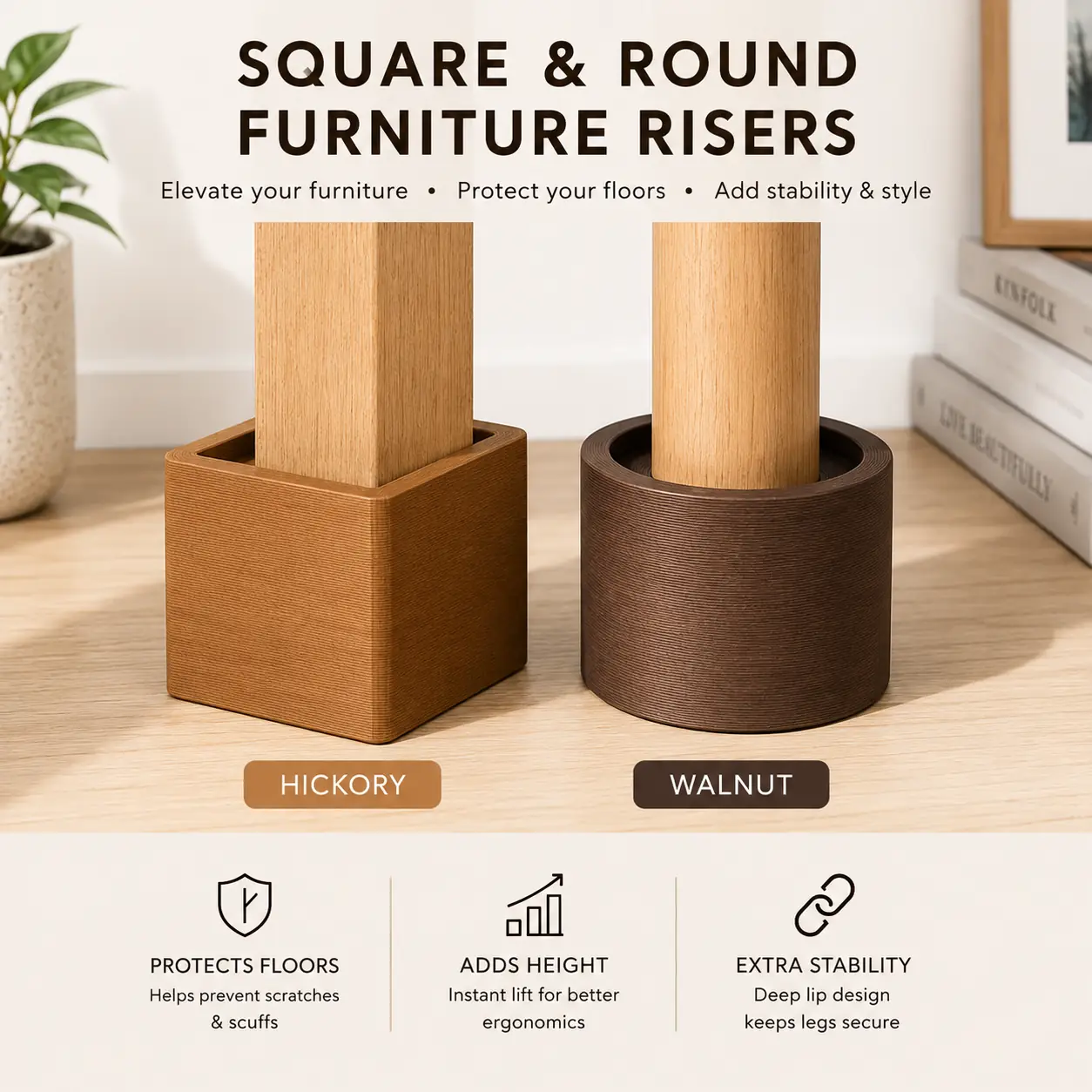
Signature finishes
Wood tones, full colors & metallics
A few inches under a bed or sofa turns dead floor into bins, luggage and seasonal storage, no new furniture required.
A higher seat or bed edge means less bending and lowering. Desks and chairs land at a posture that suits you.
A flat, non-marking footprint spreads contact across a wider area instead of concentrating it on a bare leg tip.
Configurator
Pick the one-inch range for the base and the height, enter your precise numbers, then choose how many you need. Pricing updates as you go.
Choose the one-inch range your riser should be, after adding clearance to the leg. If your leg is 1" × 1", pick a base range that includes at least 1.25" × 1.25".
Choose the one-inch range for the lift you want.
With a 1–2" base, heights above 6" are grayed out. A narrow footprint lifted that high gets tip-prone, step up a base size to unlock taller risers.
Decimals welcome, enter your exact number. These are the dimensions of the riser itself, not the furniture leg. If your leg measures 1" × 1", add clearance and enter at least 1.25" × 1.25".
Sizing tip: Add at least 1/4" of clearance on every side of the leg so the riser fits easily and stays stable. A 1" × 1" leg should become a 1.25" × 1.25" (or larger) riser base.
Starting size, enter your own measurements.
Opening size, including 0.25" clearance
Opening size, including 0.25" clearance
Within 1–2"
Rectangular leg? Choose the range for your longer opening dimension. The shorter side can be below that range, down to 0.5". Add 0.25"to each measured leg dimension before entering it.
Total weight: 200 lbs (typical chair or desk). Heavier? Change this.
Include the furniture plus anything (or anyone) on it, a bed frame, mattress and the people sleeping on it, for example. This helps us build safely.
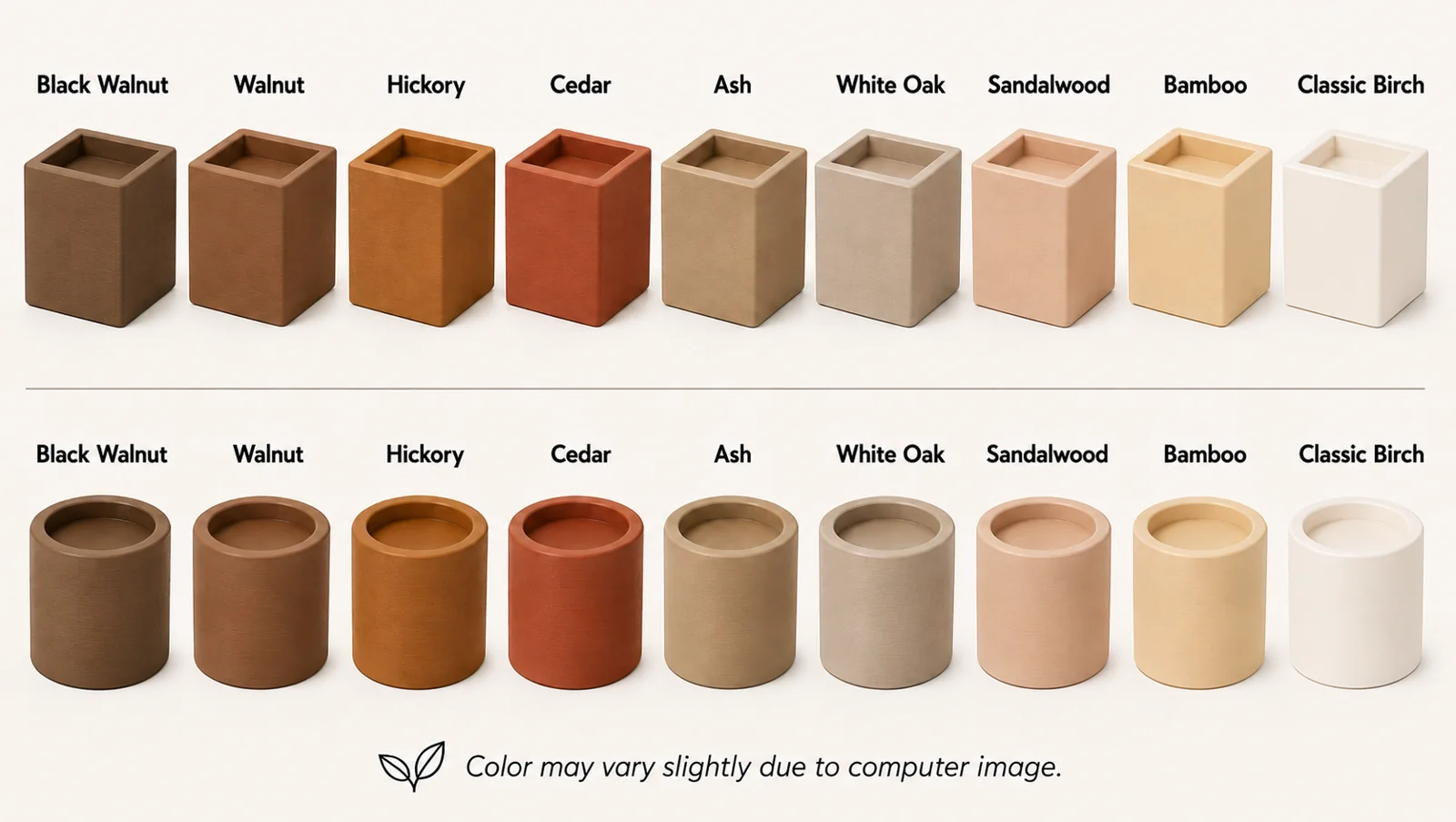
All colors are the same price, pick the one that disappears into your furniture.
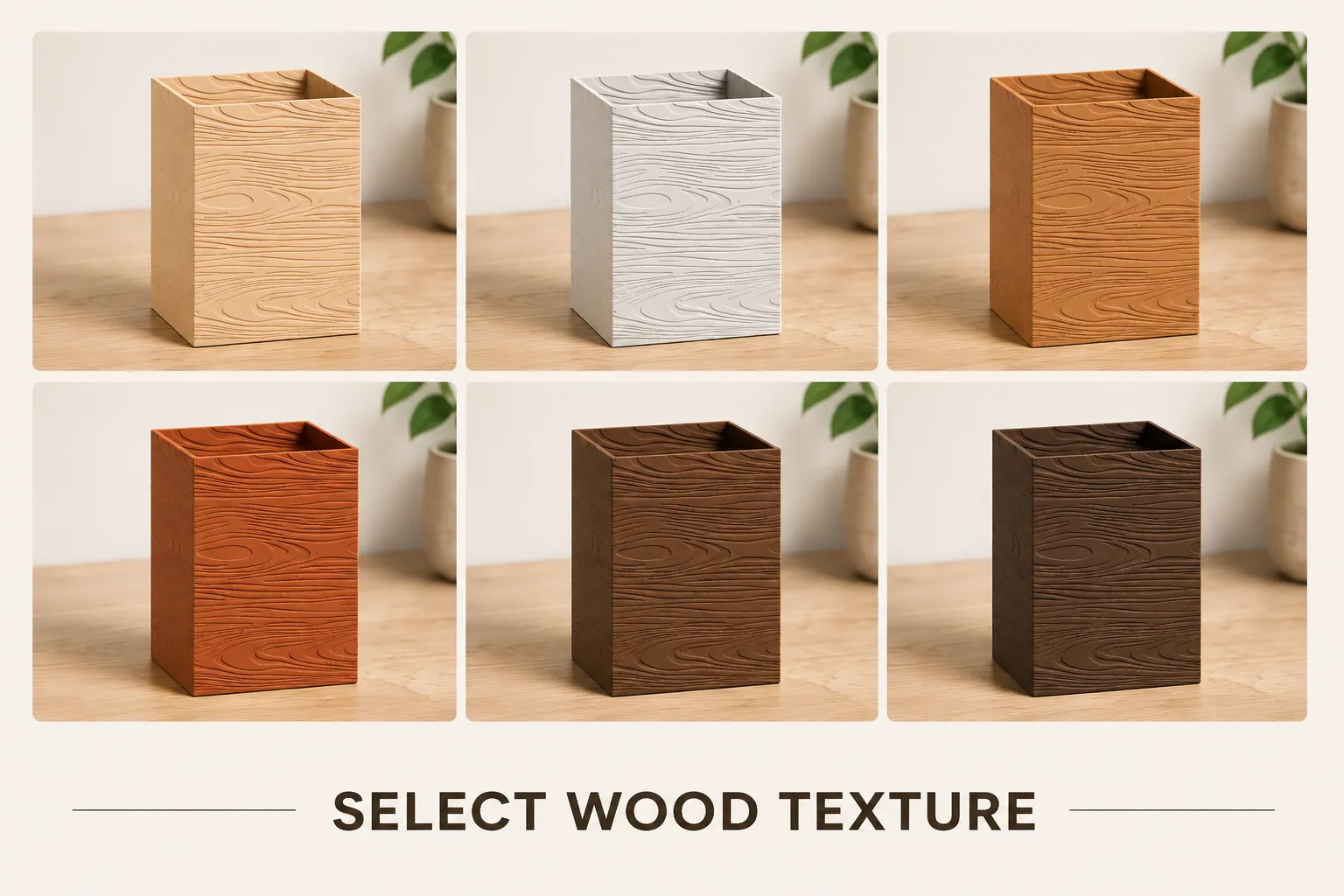
Wood tones
Any shape is available: circles, ovals, L-shapes, triangles, tapered or angled legs. Choose the base range that covers the widest part of the leg, then add the shape and its dimensions in the notes below.
0/600 characters
Want a different look? Shop colored risers in black, white, red, orange, green, blue and more, or metallic risers in gold, brass, silver, rose gold, white gold and copper.
Read these before you enter numbers, they're the difference between a riser that seats properly and one that doesn't.
The dimensions you enter are the inside opening of the riser. A leg measuring exactly 1" will not fit into a 1" opening. Add a small clearance to your leg measurement, we recommend 0.25" (an eighth of an inch is the practical minimum for a snug fit), so the leg seats properly.
Each riser has a lip around the opening, so the overall outside size of the riser is larger than the dimensions you choose. Keep that in mind where a riser sits close to a wall, rug edge or baseboard.
Raising furniture changes its center of gravity and can affect stability. Avoid loading a raised piece with a lot of weight, and avoid sudden or shock loads, sitting down hard, jumping, or children climbing on the furniture. Take extra care with taller heights and top-heavy pieces. The Extra Stability upgrade makes the riser stronger and steadier, but it is not a licence to overload it.
These risers are made for indoor use. Keep them away from direct sunlight, extreme heat and freezing temperatures, which can warp or weaken the material over time. Don't use them outdoors or in damp, unheated spaces.
Lifting something heavy, a bed, sofa or loaded dresser? See our heavy duty furniture risers for the reinforced build and load guidance.
Two minutes with a tape measure is all it takes. Measure the widest part of the leg, then add clearance.
+0.25"our recommended clearance
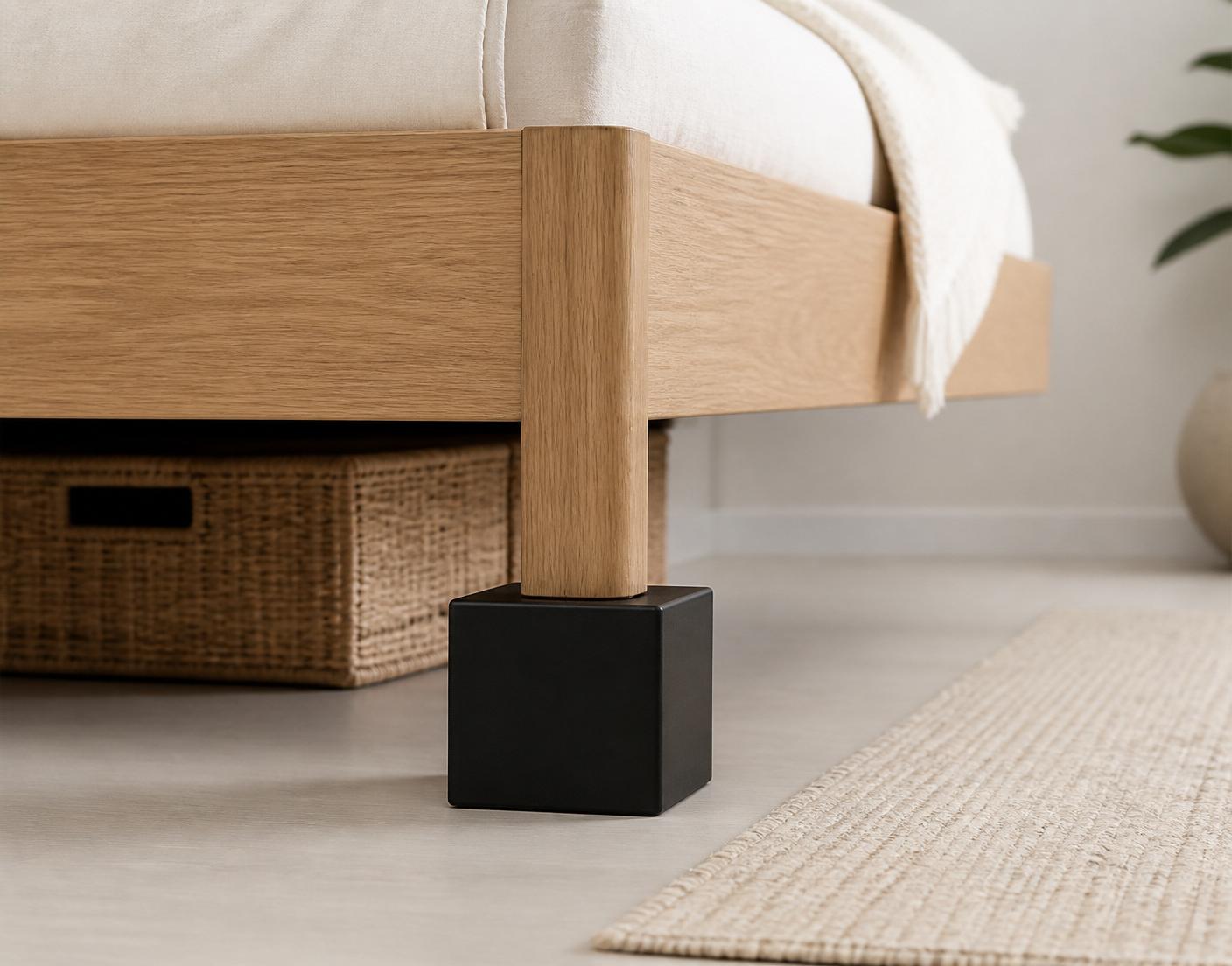
Legs taper, flare and round off. Measure width and depth at the widest point that will sit inside the riser, not at the very tip.
Take your widest measurement and add 0.25" to each dimension. A leg measuring 1.00" × 1.00" becomes a 1.25" × 1.25" opening.
Older furniture is rarely identical corner to corner. Measure every leg and configure to the largest one so the set works all round.
Measure the clearance you want to gain, or the storage box you want to slide underneath, and choose that height.
How they're made: each riser is 3D printed to order from PLA, with solid walls sized to your exact measurements and a wood-tone finish applied.
FAQ
Measure the width and depth of the leg at its widest point, the part that will actually sit inside the riser, not the tapered tip. Add 0.25" of clearance to each dimension so the leg seats properly instead of jamming. Measure all four legs, since older furniture is rarely identical corner to corner, and build to the largest one.
Look amazing and fit perfect!
Alex Carno
Verified buyer